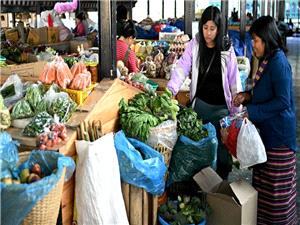
Arya News - In vegetable markets and grocery shops across Thimphu, shoppers say that even small price increases strain their budgets.
THIMPHU – For many families, the numbers behind inflation tell only part of the story. What matters more is what they pay at the market, and in 2025, everyday essentials like rice, cooking oil, and eggs have quietly become more expensive.
According to the Ministry of Finance’s annual macroeconomic performance and outlook, the country’s inflation rate stood at 3.51 percent in 2025, up from 2.78 percent in 2024, but lower than 4.23 percent in 2023.
While economists describe the rate as moderate, consumers say the impact is still felt in their daily lives.
In vegetable markets and grocery shops across Thimphu, shoppers say that even small price increases strain their budgets.
A tray of eggs that once cost Nu 250 to Nu 300 now costs double, while the price of cooking oil and imported rice has also climbed.
“For us, the problem is not the percentage, it’s the daily spending,” said a civil servant in Thimphu. “Even if prices increase a little, it adds up over the month.”
The 3.51 percent inflation means households spend more on the same basket of goods and services compared to the same period a year ago.
Inflation has traditionally moved in line with India’s due to the ngultrum’s peg to the Indian rupee and the country’s heavy reliance on imports.
However, 2025 saw a break from this trend. While inflation in India declined, Bhutan recorded a slight increase, suggesting stronger domestic pressures.
Officials from the ministry attributed this to month-on-month trends indicating the influence of local factors, including supply constraints and policy changes, which contributed to rising prices of essential goods.
Economists said Bhutan’s small and import-dependent economy makes it particularly vulnerable to price fluctuations. Disruptions in supply chains, changes in transport costs, or shifts in domestic demand can quickly translate into higher market prices.
The rise in prices in 2025 was driven by both food and non-food items. While some non-food categories such as housing, transport, and health saw price declines, food items, especially staples, continued to pressure household budgets.
In 2025, the non-food index increased to 2.53 percent, from 0.25 percer in 2024. This increase was mainly driven by the clothing and footwear index which increased to 8.76 percent, closely followed by furnishings, household equipment and routine household maintenance which increased to 6.30 percent.
In the near future, inflation may face short-term upward pressure with the introduction of the 5 percent Goods and Services Tax. Businesses are expected to pass on part of the additional costs to consumers, which could further increase prices in the coming months.
However, easing inflation in India, particularly in food and fuel, is expected to provide some relief over time. As import prices stabilise and new stocks enter the market, officials say price pressures in Bhutan could moderate.
For now, though, many households say that even modest inflation means tighter budgets.
One consumer said that when buying vegetables, Nu 1,000 buys only a few items.
“When food prices go up, everything else has to be adjusted,” said a shopkeeper. “People are buying less, and we can see that every day.”