Arya News - Milan Cortina Games ratings hit historic lows in Korea, as broadcasters question the economics of the Olympic coverage.
SEOUL – For many in South Korea, it hardly feels like the Winter Olympics are underway.
Public conversation around the Milan Cortina Games has been nearly nonexistent, even though Korea already secured two medals just four days into the competition, despite its relatively small delegation.
Viewership data points to a muted response.
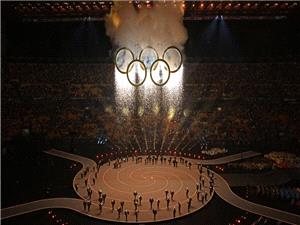
The opening ceremony of the 2026 Milan Cortina Winter Olympics delivered the weakest television performance ever recorded for an Olympic broadcast in Korea. Airing in the early hours of Saturday, the ceremony recorded a nationwide rating of just 1.8 percent, according to Nielsen Korea.
That figure falls below the previous low-water mark of roughly 3 percent set by the Paris 2024 Summer Olympics opening ceremony, which was carried jointly by the country’s three major terrestrial broadcasters, KBS, MBC and SBS.
Historically, Olympic opening ceremonies in Korea have drawn double-digit ratings, landing between 10 and 20 percent. The Beijing 2022 Winter Olympics reached 18 percent, while the Tokyo Summer Games in 2021 logged a combined real-time rating of 17.4 percent across KBS, MBC and SBS.
The lack of engagement has extended beyond the ceremony. Competition broadcasts are also struggling to escape single-digit territory.
On Monday, an afternoon airing of the mixed doubles curling match between Korea and Norway drew viewership of 3.2 percent, while the women’s 1,000-meter speedskating event later that night registered just 1.7 percent. When snowboarder Kim Sang-gyeom won silver for Korea’s first medal Monday, the broadcast recorded an average household rating of 4.2 percent.
A range of explanations have been floated for the dismal ratings, but a large portion of criticism has focused on a fundamental shift in the country’s Olympic broadcasting model as a key factor.
For decades, Olympic coverage in Korea was anchored by a consortium of the three terrestrial broadcasters, known as the Korea pool, which jointly acquired media rights to rein in escalating fees and preserve universal access. That framework changed in 2019, when cable network JTBC struck a deal with the International Olympic Committee to secure exclusive domestic broadcasting rights.
Under that agreement, JTBC now controls Korean rights to all Summer and Winter Olympics through 2032, along with the 2026 and 2030 FIFA World Cups. While the network has declined to disclose financial details, an insider at JoongAng Group, JTBC’s parent company, has told The Korea Herald that the financial burden was reportedly significant enough to “threaten the company’s stability.”
Experts say a single broadcaster is not sufficient to generate broad public engagement.
“It’s not because JTBC is doing it, but because only one outlet is covering it. The exposure just isn’t there,” said Lee Moon-haeng, a professor of media communications at Suwon University.
A decline in the volume of related content has also weighed on interest.
“YouTube plays an important role in circulating Olympic highlights, clips and short-form content, but when material is coming from just one broadcaster, public attention doesn’t carry over,” Lee said.
“Compared with a system in which multiple broadcasters simultaneously saturated the media landscape with related news, entertainment programs and highlight clips all across TV, interest is inevitably lower this year,” added Lee Sung-min, an associate professor in the Department of Media Arts and Sciences at Korea National Open University.
Still, with roughly 10 days of competition remaining, the Games could still break through under the right conditions, particularly if a dramatic upset or a star athlete captures public attention.
“These days, attention doesn’t spread evenly; it concentrates on what people find interesting and entertaining. Right now, alongside low coverage, there doesn’t seem to be a compelling storyline that can really capture public interest,” said Lee Moon-haeng. “Of course, if a standout athlete or an extraordinary moment emerges, people will tune in again, but routine competition alone is less likely to draw viewers.”
The Paris 2024 Games offered a reminder that Olympic appeal has not vanished entirely, but it has become highly situational — while viewership for competition broadcasts logged single-digit ratings on average, the men’s individual archery final drew a combined terrestrial rating of 42.2 percent.
Looking ahead, JTBC holds Korean broadcast rights to the Olympics for the next six years, and the outlook for the Games’ popularity here appears increasingly uncertain.
Lee Sung-min said that JTBC is expected to seek sub- or co-licensing deals with other broadcasters regarding upcoming Games, though it remains unclear whether such agreements will materialize.
“Olympic broadcasts are effectively loss-making for broadcasters,” he said. “Advertising revenue is no longer sufficient, so there is little incentive to pay high rights fees.”
“Negotiations will likely involve complex calculations rather than an assumption that the Olympics must be carried. Broadcasters will increasingly scrutinize viewership and monetization potential before committing, which could mean fewer opportunities for the public to encounter Olympic coverage than in the past,” Lee added.